Maintenance

Problems reach the team that fixes them.

Whoever finds a problem reports it on the spot, in their own language. It becomes a task on the place, for the team whose job it is.

Request a demo
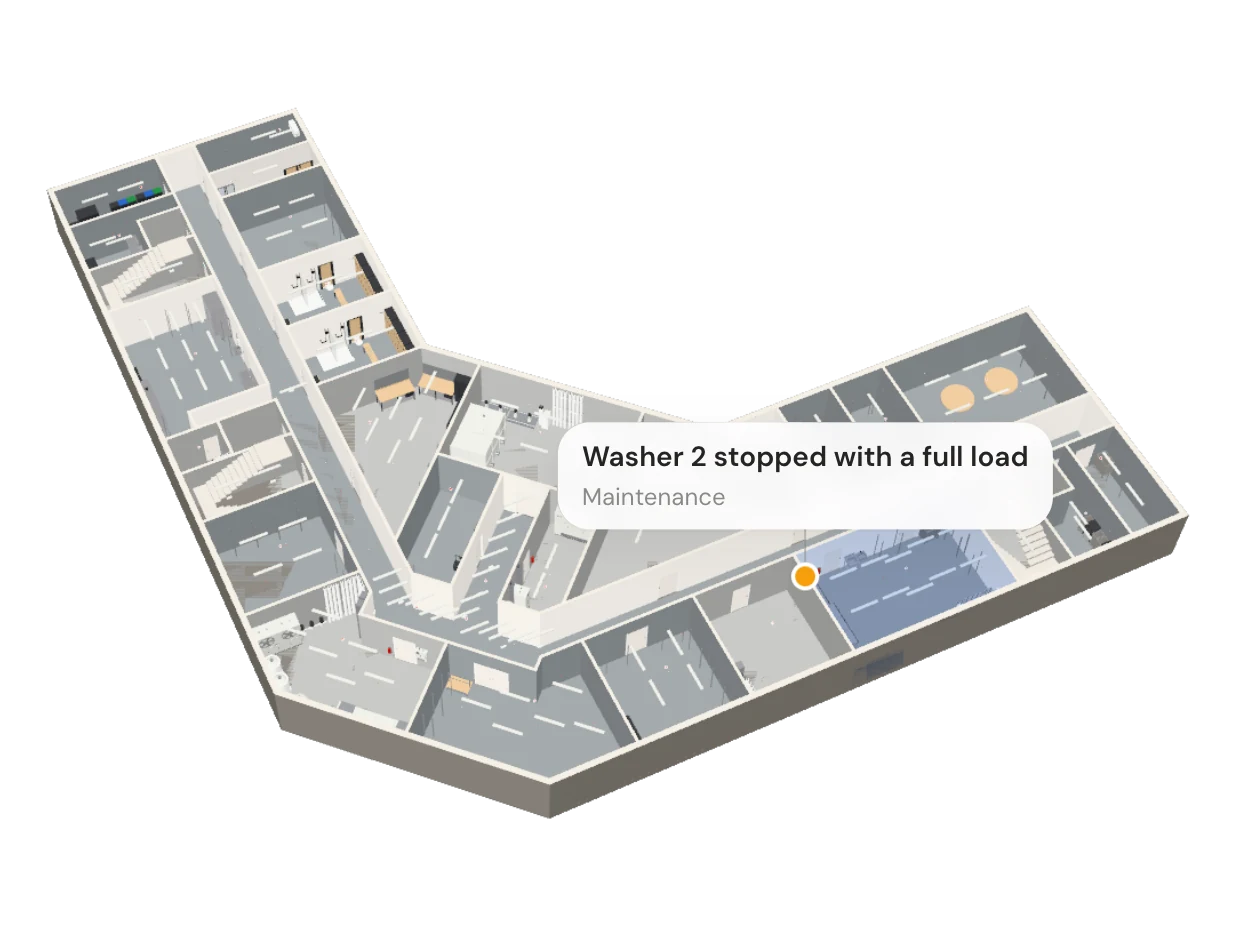
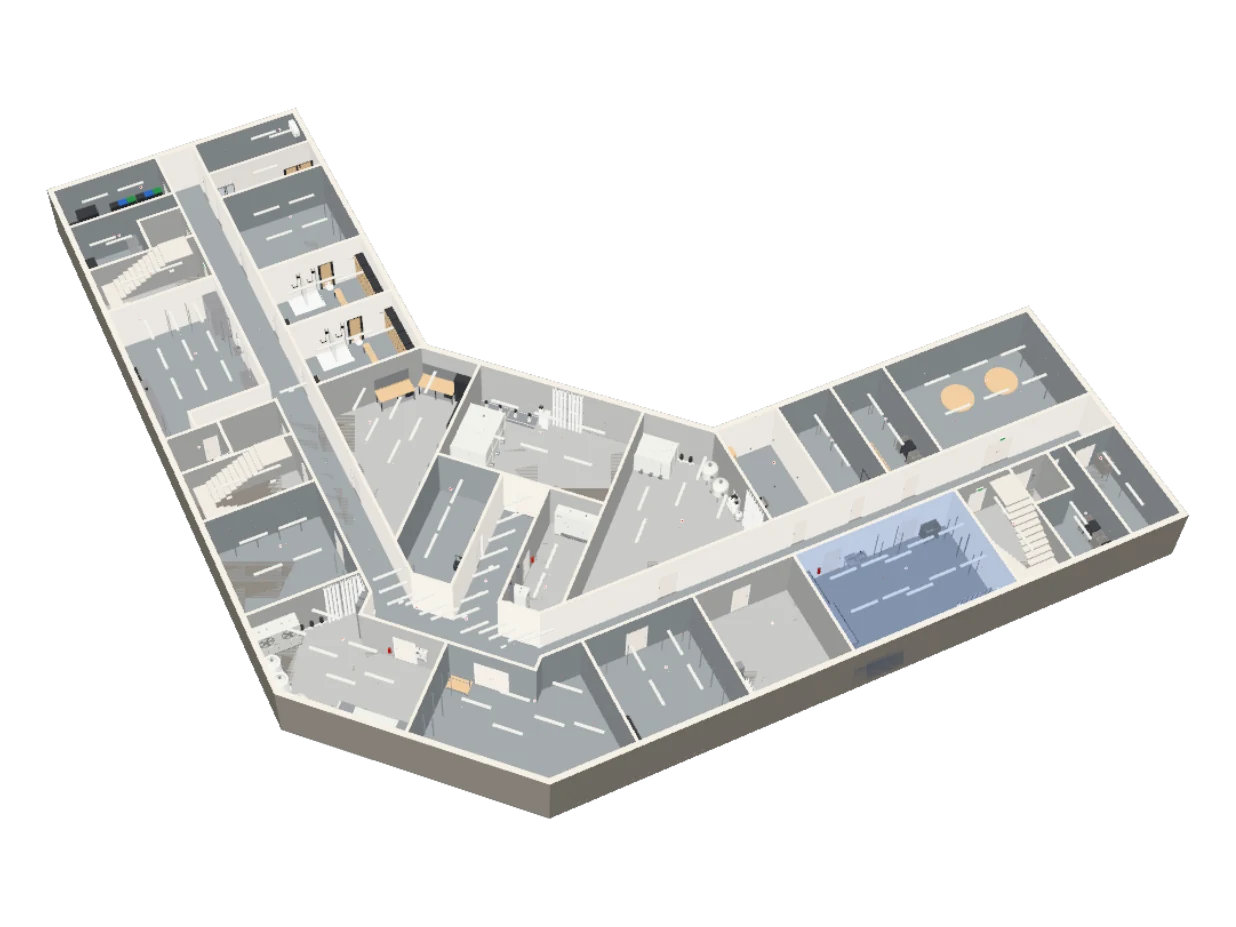
The Basement of the Vabumi Hotel, seen from above with the floors over it lifted away. The Laundry is tinted, and a card on it reads: Washer 2 stopped with a full load, Maintenance.

The day, end to end

One Friday in the laundry, from a stopped washer to a closed task.

  1. Washer-extractor 2 stops with a full load of sheets, on the busiest morning of the week.

Vabumi

The laundry attendant's phone, 09:16

2Máquina 2 parou com a carga cheia. Laundry.

The laundry attendant's phone, 09:16

Who does what

Whoever finds it

Reported on the spot

A WhatsApp text, a voice note or a photo with a few words, from the phone they already carry. Or the code on the thing: scan it, and report a problem with that thing.

The maintenance team

Take it, fix it, close it

New work arrives addressed to the team. One member presses Take it, and the task is theirs. Put it on hold, add a photo, write a comment. Close it in the app or by WhatsApp.

The contractor

A contact, not a login

Record the company on the task and call from the contact. Their open work and their work history are on the contact.

Whoever leads maintenance

What nobody has taken, and what is late

Tasks by team, what is unassigned and what is overdue. Insights shows what was reported twice at the same place.

The manager's screen

Every open task, and the place it is on.

Tasks in the workspace, narrowed to Maintenance. Five are open: one is late, three are with the team, and the washer's is in progress, marked on the Laundry in the Basement.

Draft screenshot

The details that matter

  • WhatsApp, the app, or a code on the thing.

It connects

  • Housekeeping

    What a room attendant finds is already a task

    A step marked Not OK in a room's checklist becomes a task on the thing itself. Found again at the next clean, it joins the open task.

    Housekeeping

  • Routines & compliance

    A failed check is already a task

    Completing a run raises a task for each failed check, on the place, linked to the run it came from.

    Routines & compliance

Questions

What the person who leads maintenance asks before a demo.

Is this a work-order system?

A task in Vabumi is what you would call a work order: what is wrong, where, who has it, and who closed it and when. It sits on the place itself.

Do staff need an app?

No. They report on WhatsApp, from the phone they already carry. The app itself is a page in a browser; nothing is installed.

Who can report?

Your staff, from the phone number on their profile. A number Vabumi does not know gets a reply that asks them to speak to their manager.

What if it lands with the wrong team, or in the wrong place?

Change it on the task: the team, the place, the words. The task's activity shows each change.

Does a contractor need a login?

No. The contractor is a contact on the task. Your technician calls them, and their work stays on the contact.

Our team speaks several languages.

Staff write or speak in their own language. In the app, each person reads the task in theirs, in six languages.

Can we plan work?

A task can carry a due date, a team and a contractor. Work that comes round, such as a weekly test, is a routine.

How do I see what is open?

Tasks, by team: what nobody has taken, and what is overdue.

Request a demo.

Tell us about your hotel: how many rooms, and which PMS you use. Send the request, and we get back to you by email.

We’ll reply by email
Maintenance: problems reach the team that fixes them · Vabumi Hospitality